When
the Dust Settles
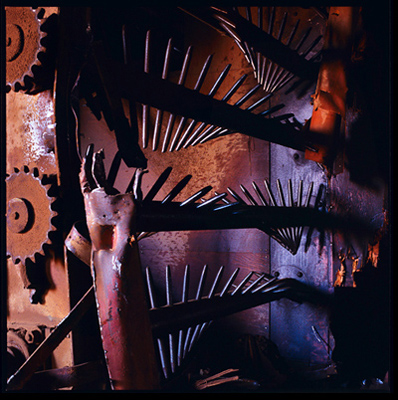
A photographic survey of the former Liggett
& Myers tobacco factory in Durham, NC
by
DL Anderson
Opening reception
Friday, October 17, 6:00 - 9:00 p.m.
On
display October 17 - November 18, 2008
For many
years Durham, North Carolina, was the world’s center of
tobacco production. One of the largest manufacturers, Liggett
& Myers Tobacco Co., operated out of a massive brick factory
complex west of downtown. In early 2000, Liggett & Myers moved
its operations to Mebane, NC, and sold the factory to Blue Devil
Partners, a local development company, which renovated a portion
of the former factory into West Village—a mixed-use complex
of residential, commercial, shopping, and dining spaces. The second
phase of development began in 2005, and DL Anderson was commissioned
by BDP to make photographs of the 992,000 square feet of former
factory space before it was permanently altered. Over the course
of two and a half years, Anderson worked to capture the final
glimpses of a mighty empire and the rise of a new era for the
Bull City.
-- DL Anderson, 2008
With manufacturing
moved to Mebane and renovations not yet begun, hard-hatted Anderson
wandered the quiet factory complex with his cameras, curiosity,
and only a hawk and a few pigeons to keep him company. As Anderson
describes it, “everything had a layer of finely ground tobacco
dust upon it. It was like snow, you could tell exactly where you
had walked before or placed a tripod. When the demolition started,
all that dust and plenty of other debris, were kicked up and flying
all over the place - often requiring the use of a mask and goggles
to walk around safely.” His photographs have soft, brown
and amber tones to them, as if viewed through the scrim of tobacco
dust. As demolition progressed, Anderson says “I was racing
big men with crowbars and torches who were pulling everything
out of the factory, which at that point had become my
factory. I spent so much time there wandering around and appreciating
the decay, working on the mystery of its purpose, that it hurt
to see them ripping it all apart. So I kept on capturing the light,
coming back to see how it was changing as new windows were knocked
out.”
|